

CEN Graded Padlocks: How Are They Graded?
Choosing a padlock should be simple, but it often isn't. As soon as you start looking, you'll come across terms like CEN grade that don't mean much if you've never bought a padlock before.
The problem is that most product listings mention the CEN grade without explaining what it actually tells you. That makes it hard to know which padlock is right for your needs.
This guide makes it easy. By the end, you'll understand what CEN grades mean, why they matter, and which padlock security grade you should choose.
In This Article
What is CEN Grade?
CEN stands for Comité Européen de Normalisation, or Central European Norm. In plain terms, it's an independent European testing standard that tells you exactly how much punishment a padlock can take before it gives up.
Before CEN grading existed, manufacturers could use vague marketing terms like "heavy duty" or "high security" without those claims meaning anything specific. CEN grade padlocks have to earn their rating through standardised physical tests, so when you see a grade on a product, it's a real test result rather than a marketing claim.
The grading runs from 1 to 6. Every step up the scale means the lock has passed tougher tests. It's the clearest, most honest way to compare padlock security across different brands and models.
What are CEN Padlock Ratings?
| CEN Grade | Security Level | Typical Use Cases |
|---|---|---|
| Grade 1 | Low | School lockers, medicine cupboards, low-value storage |
| Grade 2 | Entry level | Luggage, cabinets, low-risk indoor environments |
| Grade 3 | Medium | Residential gates, sheds, bike storage |
| Grade 4 | High | Commercial premises, storage units, outdoor gates |
| Grade 5 | Extra high | Warehouses, building sites, industrial environments |
| Grade 6 | Maximum | Government facilities, critical infrastructure, high-value assets |
CEN Grade
Grade 1
Security Level
Low
Typical Use Cases
School lockers, medicine cupboards, low-value storage
CEN Grade
Grade 2
Security Level
Entry level
Typical Use Cases
Luggage, cabinets, low-risk indoor environments
CEN Grade
Grade 3
Security Level
Medium
Typical Use Cases
Residential gates, sheds, bike storage
CEN Grade
Grade 4
Security Level
High
Typical Use Cases
Commercial premises, storage units, outdoor gates
CEN Grade
Grade 5
Security Level
Extra high
Typical Use Cases
Warehouses, building sites, industrial environments
CEN Grade
Grade 6
Security Level
Maximum
Typical Use Cases
Government facilities, critical infrastructure, high-value assets
The real dividing line is between Grade 3 and Grade 4. Grades 1 to 3 are built to put off opportunistic thieves — someone who tries a lock and moves on if it doesn't give immediately. Grades 4 and above are built to stop someone who's come prepared with tools and means to get in.
If you're securing anything of real value outdoors, Grade 3 is the minimum. For commercial use, start at Grade 4.
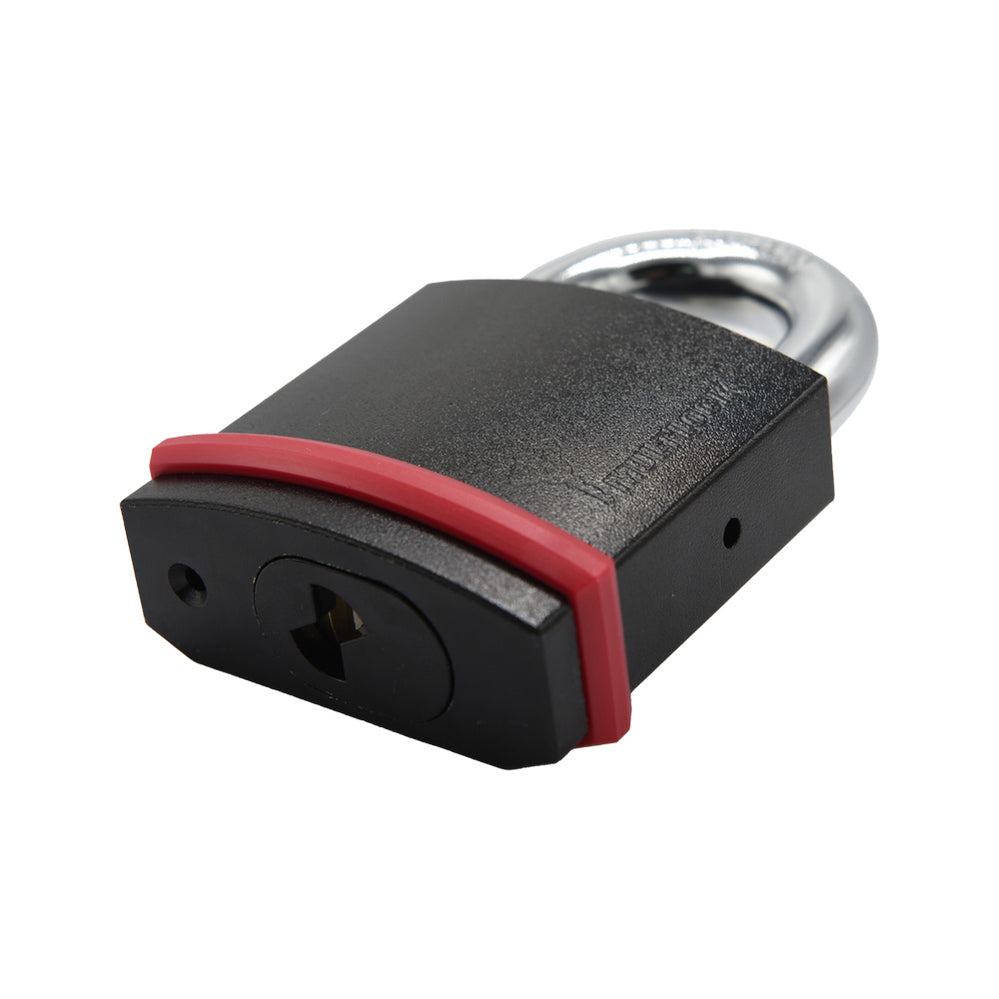
CEN Grade 6 is as high as the rating system goes. These locks are designed to withstand sustained, determined attacks using drills, saws and brute force. They're used on government facilities and anywhere the contents are valuable enough that someone might invest serious effort in getting through.
Our Mul-T-Lock NE14L is our top choice for a CEN 6 padlock — a heavy-duty open shackle lock that's both attack and weather resistant, making it a hardy piece of kit. Step down to Grade 5 and you've still got exceptional security. The Mul-T-Lock NE12H is the go-to for warehouses and high-risk outdoor environments where Grade 4 might not be enough.
For most businesses with commercial premises, storage units or outdoor gates, a CEN 4 padlock is the practical sweet spot. We recommend the Squire WS75 — high security resistance without the premium of Grades 5 or 6, and it satisfies most insurer requirements too.
A padlock can't self-certify. It has to go through independent lab testing to earn its grade.
How Padlocks Are Tested for a CEN Grade
| Test | What It Checks |
|---|---|
| Key differs | Minimum unique key combinations to prevent unauthorised copying |
| Shackle pull | Resistance to brute-force removal |
| Shackle twist | Resistance to twisting force designed to snap the shackle |
| Shackle cutting | Resistance to bolt cutters and hacksaws |
| Impact blow | Resistance to hammer strikes and blunt force |
| Temperature | Function after extreme cold, including freezing attacks |
| Drilling and sawing | Resistance to power tools, one of the most common real-world break-in methods |
Test
Key differs
What It Checks
Minimum unique key combinations to prevent unauthorised copying
Test
Shackle pull
What It Checks
Resistance to brute-force removal
Test
Shackle twist
What It Checks
Resistance to twisting force designed to snap the shackle
Test
Shackle cutting
What It Checks
Resistance to bolt cutters and hacksaws
Test
Impact blow
What It Checks
Resistance to hammer strikes and blunt force
Test
Temperature
What It Checks
Function after extreme cold, including freezing attacks
Test
Drilling and sawing
What It Checks
Resistance to power tools, one of the most common real-world break-in methods
“
The gap in resistance between a Grade 1 and a Grade 6 lock is significant. They are not remotely comparable products. A Grade 6 lock passes every test at maximum intensity. A Grade 1 provides only enough resistance to deter someone who wasn't very committed to begin with.
— SOLD Secure
”What CEN Grade Padlock Do I Need?
| Situation | Recommended Grade |
|---|---|
| Locker, cabinet, low-value indoor storage | Grade 1–2 |
| Home shed, garden gate, bike | Grade 3 |
| Storage unit, commercial outbuilding | Grade 3–4 |
| Commercial property, yard, container | Grade 4–5 |
| Warehouse, building site, industrial unit | Grade 5 |
| High-value assets, government or critical use | Grade 6 |
Situation
Locker, cabinet, low-value indoor storage
Recommended Grade
Grade 1–2
Situation
Home shed, garden gate, bike
Recommended Grade
Grade 3
Situation
Storage unit, commercial outbuilding
Recommended Grade
Grade 3–4
Situation
Commercial property, yard, container
Recommended Grade
Grade 4–5
Situation
Warehouse, building site, industrial unit
Recommended Grade
Grade 5
Situation
High-value assets, government or critical use
Recommended Grade
Grade 6
Check your insurance policy first
Many commercial insurers specify a minimum CEN grade for a security claim to be valid. A CEN 4 padlock or above is what most business premises policies require — check yours before you buy rather than after something goes wrong.
Where the lock sits matters
A padlock on a remote, exposed gate is a much easier target than one inside a monitored compound. If your lock is hard to keep an eye on, go one grade higher than the table suggests. For most exposed outdoor locations, a CEN 5 padlock is the sensible baseline.
A visible, quality lock puts people off
Most thieves are opportunistic and looking for easy targets. A CEN 6 padlock on a high-value container tells anyone considering it that it's not going to be quick or easy. That visible deterrent has real value beyond the physical security it provides.
When in doubt, go higher. We've been doing this for nearly 15 years and we've never had a customer say they wished they'd bought a cheaper lock. The cost of replacing stolen goods will almost always outweigh the difference in price between two grades.
Closed Shackle vs Open Shackle: Does It Matter?
The shackle is the metal loop that passes through whatever you're securing. On an open shackle padlock it's exposed on both sides, which means an attacker can get a bolt cutter or hacksaw onto it directly.
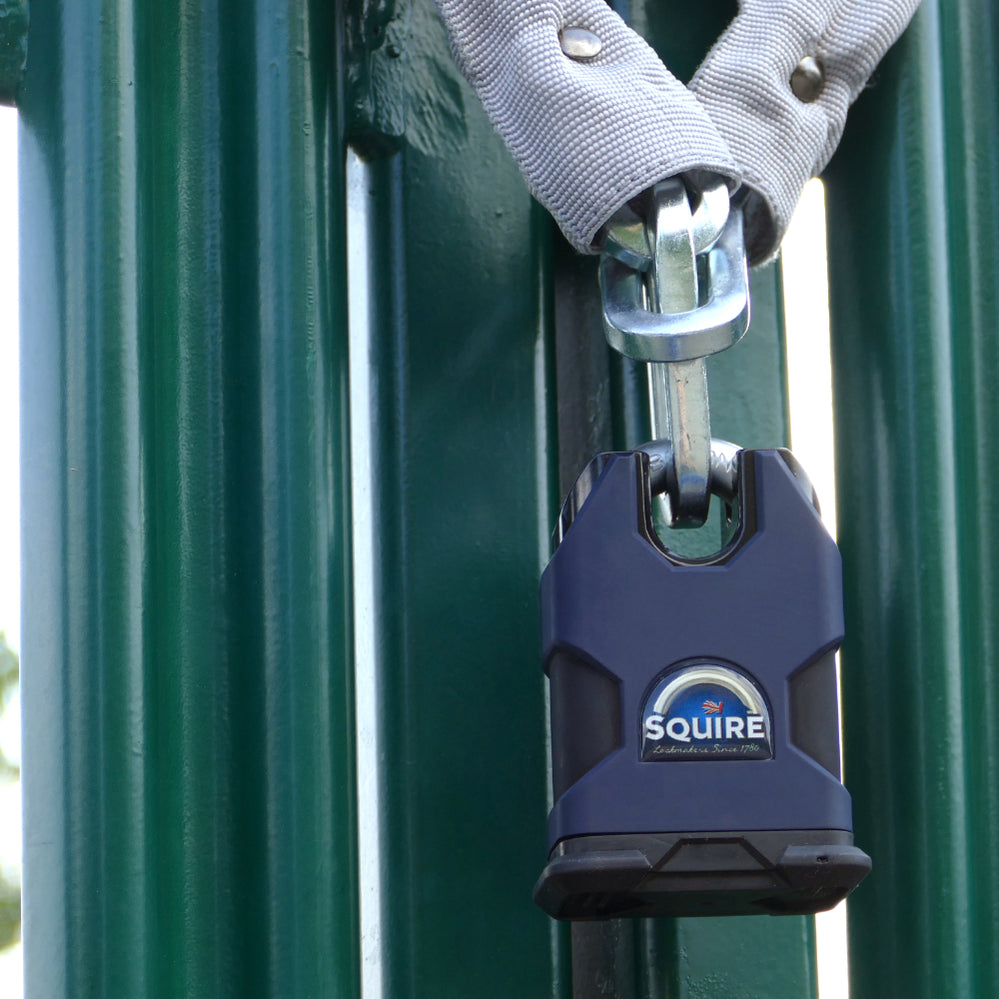
On a closed shackle padlock, the body of the lock wraps around the shackle, leaving very little metal exposed to attack.
The practical upshot is that a closed shackle padlock at a given CEN grade is significantly harder to defeat than an open shackle padlock at the same grade. If your lock is going on a gate, container or anywhere exposed and accessible, closed shackle is the smarter choice. Open shackle padlocks are better suited to applications where the shackle needs to pass through a larger hasp or fitting and attack access is more limited.
CEN Grade Padlocks at Locks Direct
We stock CEN grade padlocks across the full range, Grade 3 through to Grade 6, and we only carry brands we stand behind.
Whether you need a CEN 4 padlock for a commercial gate or a CEN 6 padlock for maximum protection, we'll point you to the right one.
Our high security padlocks from Mul-T-Lock cover Grades 4 to 6, and if key control is a concern alongside physical security, our restricted padlocks limit who can get a copy of the key cut. It's a layer of protection that's easy to overlook until it matters.
Not sure which grade fits your situation? Call us on 0800 542 1264 (freephone) or drop us an email at info@locksdirect.co.uk.
Frequently Asked Questions
What does CEN grade mean on a padlock?
CEN stands for Comité Européen de Normalisation — it's an independent European testing standard that tells you exactly how much punishment a padlock can take before it gives up. The grading runs from 1 to 6, with every step up meaning the lock has passed tougher physical tests. Unlike vague marketing terms like "heavy duty", a CEN grade is a real, independently verified test result.
What is the highest CEN grade padlock available?
CEN Grade 6 is the highest rating in the system. These locks are designed to withstand sustained, determined attacks using drills, saws and brute force, and are used on government facilities and critical infrastructure. The Mul-T-Lock NE14L is a top example — a heavy-duty open shackle lock that's both attack and weather resistant.
What CEN grade do I need for a garden shed or gate?
Grade 3 is the recommended minimum for residential outdoor use such as sheds, garden gates, and bike storage. If the location is remote or exposed, consider going to Grade 4 for added protection. Grades 1 and 2 are best suited to low-risk indoor applications like lockers and cabinets.
Do commercial insurers require a specific CEN padlock grade?
Yes, many commercial insurers specify a minimum CEN grade for a security claim to be valid. A CEN 4 padlock or above is what most business premises policies require, but you should check your specific policy before purchasing rather than after something goes wrong.
What is the difference between a closed shackle and open shackle padlock?
The shackle is the metal loop that passes through whatever you're securing. On an open shackle padlock it's exposed on both sides, giving an attacker direct access with bolt cutters or a hacksaw. On a closed shackle padlock, the body wraps around the shackle leaving very little metal exposed. A closed shackle padlock at a given CEN grade is significantly harder to defeat, making it the smarter choice for exposed outdoor applications.
Related Blogs & Guides
Learn more with our curated selection of tips and guides.


